
 By Camille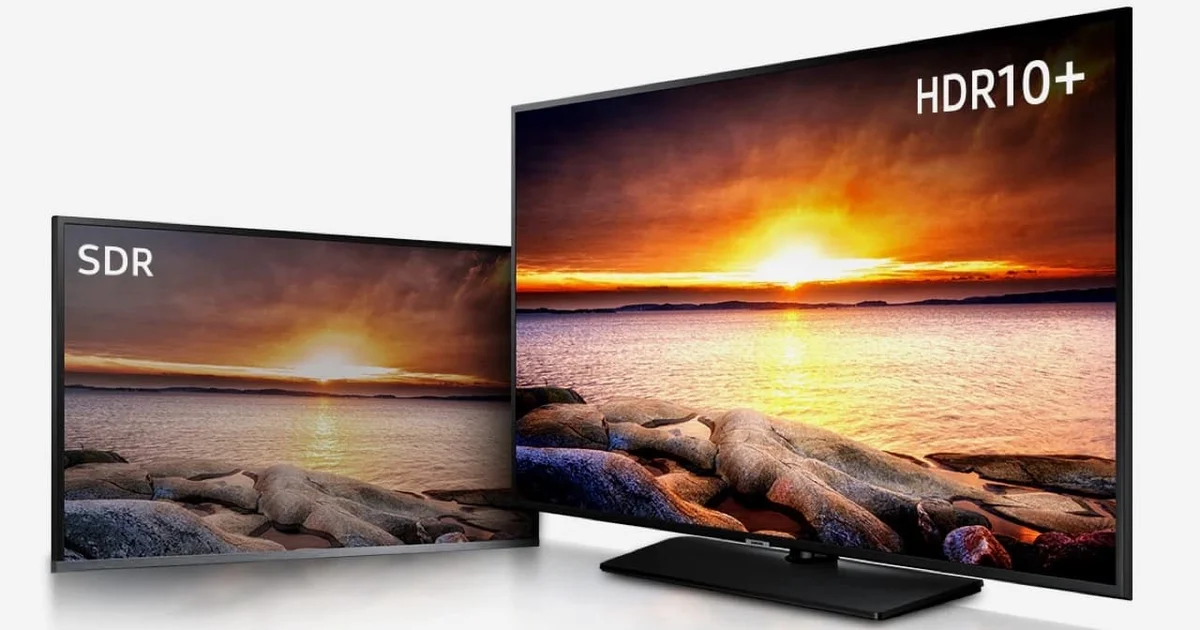
HDR describes the goal, not one specific format
High Dynamic Range is about reproducing a wider range between dark areas and bright highlights while retaining useful detail and color information between those extremes.
That can make a bright reflection look genuinely intense without turning it into a flat white patch, while dark portions of the same image retain gradation instead of collapsing into black.
How that information is encoded and delivered depends on the HDR format. HDR10, HDR10+, Dolby Vision and HLG all approach that job differently.
HDR10 is the common baseline
When a product page casually says HDR, HDR10 is often the format sitting underneath that claim. It became the basic interoperable HDR format across Ultra HD televisions, players and a huge volume of content.
HDR10 uses the PQ transfer function and a 10-bit video signal. PQ itself defines light levels extending as high as 10,000 nits, although consumer displays operate well below the full theoretical range.
The TV therefore has to map the content into the brightness range it can actually reproduce.
HDR10 uses one set of metadata for the whole program
That process relies in part on static metadata. HDR10 can communicate information including the content's color volume, maximum pixel light level and maximum frame-average light level.
Static means those instructions do not continually change as the movie moves between radically different scenes.
A television still performs its own processing, of course. The limitation is that the metadata itself gives the display one overall description rather than a fresh set of guidance for each scene.
HDR10+ adds dynamic metadata
This is the defining difference. HDR10+ builds on HDR10 and supplies dynamic metadata that can describe changing brightness and contrast requirements on a scene-by-scene basis, or even frame by frame in some applications.
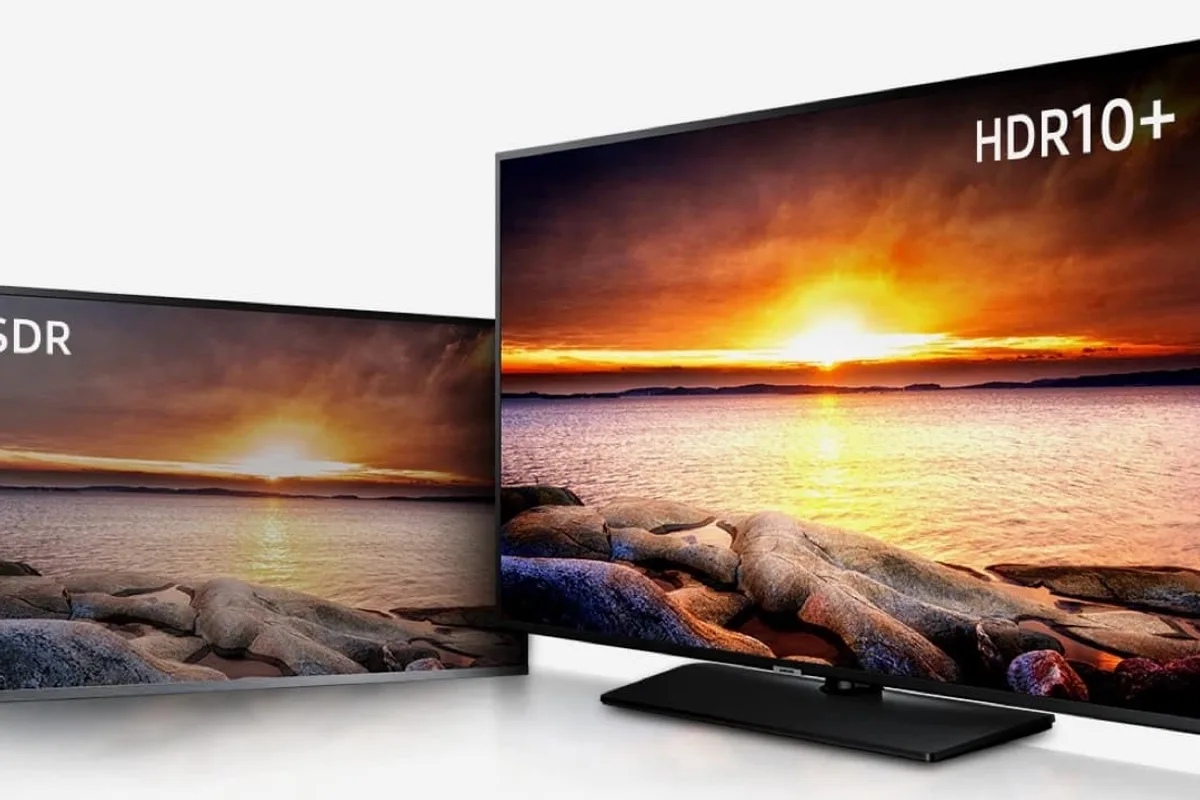
The display can use that additional information while calculating its tone mapping instead of treating a very dark sequence and an extremely bright one from the same movie under one static set of metadata.
It is better information, not extra panel performance.
The television still determines how impressive HDR looks
That distinction is easy to lose in a wall of certification logos. HDR10+ cannot give a dim television another thousand nits of brightness or turn weak LCD blacks into OLED blacks.
Panel contrast, peak and sustained brightness, local dimming, color volume and the manufacturer's video processing remain critical.
Two HDR10+ televisions can therefore produce dramatically different pictures from the same HDR10+ stream.
Dynamic metadata matters most when tone mapping has real work to do
Some scenes fit comfortably inside a display's capabilities. In those cases, HDR10 and HDR10+ may look extremely similar.
The dynamic system becomes more useful when brightness changes substantially through a program or when a display has to compress highlights aggressively to fit the mastered content within its own limits.
That is where scene-specific guidance can preserve a better balance between highlights, darker regions and the rest of the image.
HDR10+ falls back cleanly to HDR10
HDR10+ is backwards compatible with HDR10. An HDR10-only television receiving HDR10+ content can still play the HDR10 base version rather than dropping all the way back to SDR.
What disappears is the HDR10+ dynamic metadata.
That is an important practical difference from treating every premium HDR format as a completely separate master.
Every device in the playback path still matters
To get HDR10+, the title must contain it, the service or player must deliver it and the television must support it.
External streaming boxes, disc players, AV receivers and other HDMI devices can also matter depending on how the system is connected. A non-compatible step in the chain may leave you with the HDR10 fallback instead.
Streaming support has become much broader
Prime Video has supported HDR10+ since 2017 and remains its most prominent streaming home. HDR10+ Technologies says Prime Video's HDR-enabled library carries HDR10+ capability and metadata.
Netflix added HDR10+ distribution in 2025. The format also appears on UHD Blu-ray releases and has a separate HDR10+ GAMING branch for interactive content.
Availability still varies by title, region, app and playback hardware, so a service supporting HDR10+ does not mean every screen will receive it.
HDR10+ ADVANCED is the new 2026 layer
The ecosystem is already moving again. On September 2, HDR10+ Technologies said HDR10+ ADVANCED was available across thousands of Prime Video movies and series and had been licensed and certified on nearly 500 devices.
ADVANCED adds metadata tools for enhanced overall brightness, local tone mapping, color control, genre-based processing and motion handling. Its Intelligent Motion Smoothing feature can let content creators provide guidance for dynamically changing motion smoothing to reduce visible judder.
It also expands the format's gaming side with support aimed at cloud gaming and real-time adaptation to ambient light.
The 10 does not mean 1,000 nits
A persistent shortcut says HDR10 is a 1,000-nit format because it uses 10-bit video. Those are unrelated limits.
PQ describes values up to 10,000 nits, and HDR10+ documentation explicitly separates bit depth from peak brightness. Current streaming delivery generally remains 10-bit because of practical codec workflows.
The important part of the plus sign is still dynamic metadata.
Should HDR10+ decide which television you buy?
It is worth having when the rest of the television is already good. Between two similarly capable displays, broader HDR format support gives you more opportunities to receive the preferred version of a movie or series.
It should not outrank the fundamentals. A strong panel with excellent HDR brightness, contrast and tone mapping can be a better purchase than a weaker television whose specification sheet simply contains more HDR logos.
- HDR is the broad category.
- HDR10 is the widely supported baseline with static metadata.
- HDR10+ adds dynamic metadata while remaining backwards compatible with HDR10.
- HDR10+ ADVANCED expands the system with newer brightness, tone-mapping, color and motion metadata.
- None of those logos can compensate for weak display hardware.