
 By Kilam
Graveyard Keeper could become a logistics problem long before the player deliberately tried to optimize it. Resources lived in different places, workshops depended on one another, NPC schedules mattered and walking between all of those points consumed time.
The sequel appears to be tackling that structure directly.
Talents add another progression layer
The Technology Tree returns, but Lazy Bear Games has now confirmed a separate Talent system. The studio has not published every Talent or enough numerical detail to judge optimal builds, so any balance conclusions would be premature.
What is clear is that character development no longer needs to sit entirely inside the old technology framework.
Automation now feeds more than the graveyard
Zombie labor expands alongside the production economy. Workers can handle repetitive processes while machinery and production chains push resources through increasingly elaborate operations.
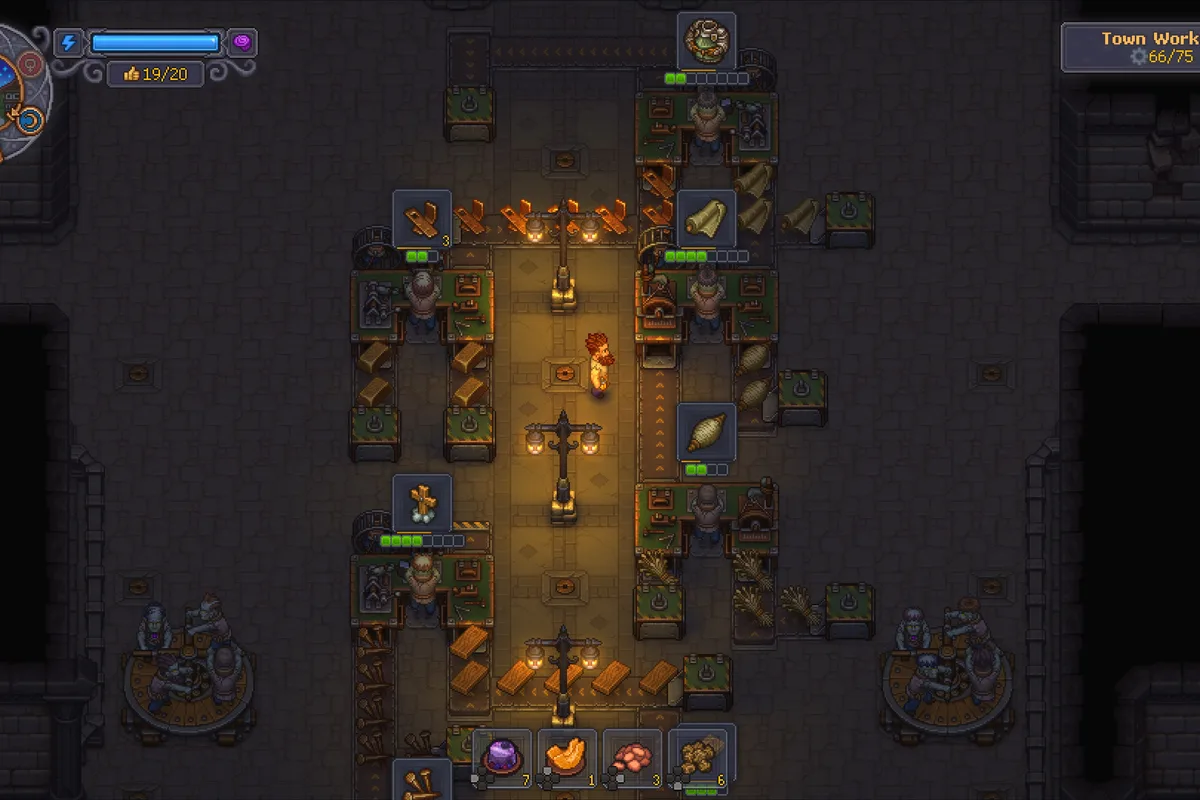
Those resources have more destinations this time. Town restoration creates construction demands, businesses feed the wider economy, and the new combat layer requires weapons, armor and fortifications.
That makes automation less of a convenience feature and more of a shared backend for several gameplay loops.
A larger map forces a fast-travel redesign
The Teleportstone is gone. Graveyard Keeper 2 instead uses Milestones for fast travel across an expanded world that includes the Town's southern outskirts, another village and tavern, a new forest, swamp, church and graveyard.
For a simulation game, travel design is effectively an efficiency system. Every unnecessary walk is time that cannot be spent crafting, progressing quests or reorganizing production.
Changing how players move through the map therefore matters considerably more than the feature's size on a bullet list would suggest.
Combat plugs into the same resource network
The Grand Inquisitor can train zombie troops, build fortifications and manufacture their equipment. The important unknown is how aggressively those military requirements compete with ordinary production.
If weapons and defenses meaningfully consume resources needed elsewhere, the combat layer could create interesting logistical choices. If not, it risks becoming another progression checklist sitting beside the management game.
Lazy Bear Games has explained the structure. Balance will have to wait for the finished version.
The PC requirements remain lightweight
Steam lists 4 GB of RAM for the minimum specification with hardware as old as a GeForce GT 640 or Radeon HD 7750 at a 720p target. The recommended 1080p specification moves to 8 GB of RAM and a GTX 660 or Radeon HD 7850.
That fits a game whose ambitions are centered on simulation density rather than rendering technology.
Graveyard Keeper 2 launches September 22, 2026. The real technical test will be whether all those new interconnected systems create depth without recreating the original game's most tedious bottlenecks.