
 By Adri
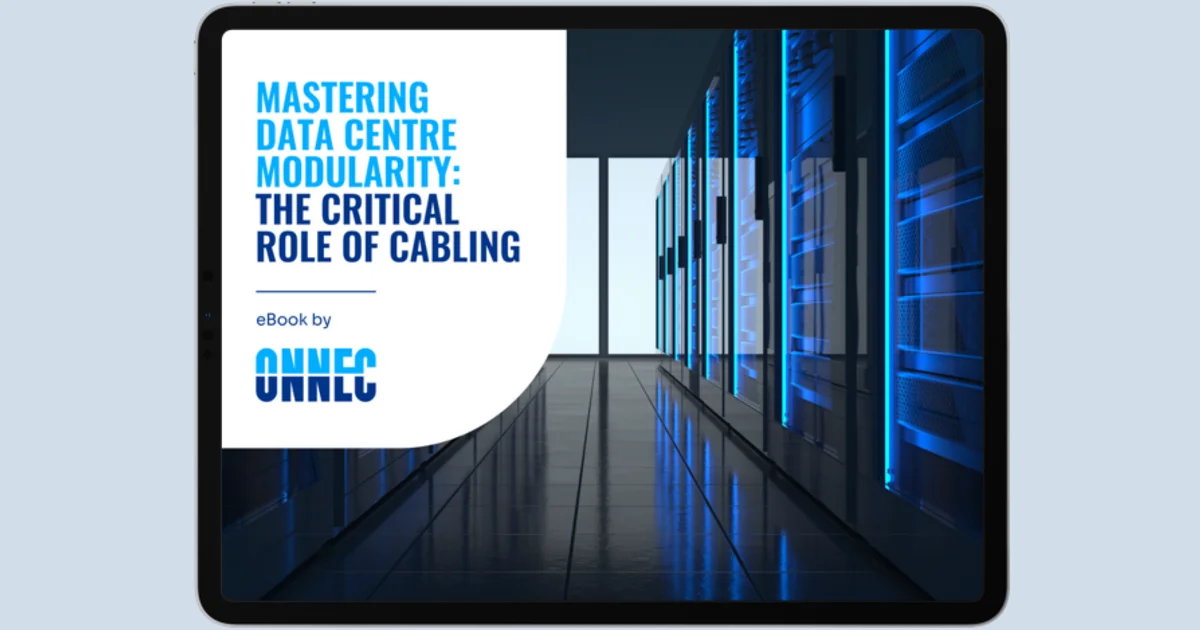
Thousands of advanced AI accelerators cannot deliver their intended performance if the network connecting them is incomplete, unreliable or poorly designed.
While GPU specifications receive most of the attention, large computing clusters depend on physical infrastructure that is much less visible.
Fiber-optic links, network switches, racks, cable management systems and testing procedures all contribute to making computing capacity operational.
CBRE is expanding its exposure to that part of the technology industry.
The Dallas-based real estate services company has signed a definitive agreement to acquire Onnec Group Limited, a British specialist in the design, deployment and maintenance of network and data center infrastructure.
The acquisition is intended to extend CBRE's critical infrastructure capabilities across Europe and Asia Pacific while complementing its existing US operations.
The reported maximum price is approximately $1 billion, although the payment structure is more complex than that headline suggests.
The acquisition combines upfront cash with performance-based payments
CBRE has agreed to pay an initial £460 million in cash, equivalent to approximately $610 million.
An additional earnout of up to £300 million, or approximately $400 million, may be paid over several years.
The additional amount depends on Onnec achieving specified growth thresholds.
The maximum potential consideration is therefore approximately £760 million, or around $1 billion using the conversions provided by CBRE.
That does not mean the company is paying the entire amount immediately.
The upfront payment is part of the agreed transaction, subject to completion, while the earnout is conditional on future performance.
An earnout allows an acquisition price to reflect results achieved after the transaction closes.
It can be particularly relevant when an acquired company's expected growth is an important part of its valuation.
The parties have not publicly detailed every target that would determine the final payment.
The acquisition also remains subject to customary regulatory approvals.
CBRE expects completion around the end of 2026.
Onnec has nearly four decades of infrastructure experience
Onnec was founded in 1986 and is headquartered in London.
It has approximately 800 employees and provides technical infrastructure services for major technology companies and data center operators.
Its work includes designing networks, installing structured cabling, deploying fiber connections and commissioning network equipment.
The company also offers maintenance, equipment changes and technical support within operating facilities.
These services are relevant throughout the life of a data center.
During construction, teams establish cable pathways, install racks and connect the required systems.
After a facility begins operating, customers may need additional capacity, network modifications or equipment replacement.
The work requires coordination with electrical, cooling, security and building infrastructure teams.
Onnec has a substantial presence in the United Kingdom, continental Europe and Asia Pacific.
CBRE sees that geographic footprint as complementary to its existing infrastructure services business in the United States.
AI clusters are increasing the importance of fiber networks
The growing value of connectivity services reflects changing computing requirements.
Traditional enterprise applications use network infrastructure for data exchange, storage access and communication between services.
Large AI training clusters introduce particularly demanding connectivity patterns.
Thousands of accelerators may work on different parts of a model while exchanging information repeatedly.
Those exchanges need sufficient bandwidth and low latency to prevent expensive processing hardware from spending excessive time waiting for data.
Network architecture therefore contributes directly to practical computing performance.
Dense AI clusters may require large numbers of optical links, high-capacity switches and complex physical connections between racks.
As the number of connections increases, installation quality, cable identification, testing and maintenance become more important.
An incorrectly installed link or an incomplete network can delay the commissioning of equipment that has already been delivered.
Such delays can have substantial financial consequences when operators have invested heavily in computing hardware.

A Frankfurt project illustrates the scale of the work
Onnec's previously announced projects provide an example of its technical responsibilities.
In May 2026, the company reported completing a major network installation in the first building of a hyperscale campus in Frankfurt.
The broader site has a planned total capacity of 112 megawatts across approximately 108,000 square meters.
For its part of the project, Onnec reported installing nearly 4,000 copper cables and more than 500 fiber-optic cables.
The optical work required over 13,000 individual splices.
The installation also covered more than 100 equipment racks.
These figures describe a particular Onnec project, not every data center the company serves.
They nevertheless illustrate the precision and labor involved in hyperscale network deployment.
Fiber splicing joins optical fibers and requires careful testing to ensure acceptable signal transmission.
When thousands of such connections are needed, installation and verification become substantial parts of the construction schedule.
Onnec also delivered documentation intended to support future infrastructure management.
That can help operators expand or modify their facilities without losing visibility into existing connections.
CBRE wants a global technical infrastructure business
The proposed acquisition is part of a wider strategic shift for CBRE.
The company is traditionally associated with commercial real estate brokerage, advisory work, asset management and property-related services.
It is increasingly expanding into technical infrastructure services.
Data centers are an important part of that strategy because they require specialist design, installation and maintenance expertise.
By adding Onnec, CBRE hopes to strengthen its services across several major geographic markets.
A global infrastructure provider may be useful to hyperscale operators building facilities in multiple countries.
The ability to coordinate design, deployment, testing and maintenance across regions can potentially reduce operational complexity.
However, international scale does not eliminate local requirements.
Construction rules, labor conditions, supplier networks and regulatory obligations vary between countries.
Any operational advantages will depend on CBRE's ability to combine common processes with local expertise.
Onnec is forecast to generate nearly $500 million in 2027 revenue
CBRE has provided financial expectations for the company it intends to acquire.
It forecasts approximately £370 million in Onnec revenue for 2027, equivalent to around $498 million.
The company is also expected to generate more than £50 million in core EBITDA, approximately $67 million.
Core EBITDA is an adjusted operating performance measure used by the company.
The specific adjustments can differ from conventional accounting measures and should be considered when comparing businesses.
These numbers are management forecasts, not published actual results for 2027.
CBRE also expects the transaction to be immediately accretive to its core earnings per share after completion.
That remains a forward-looking expectation.
The ultimate financial return will depend on Onnec's performance, integration expenses and the final consideration paid.
The conditional earnout makes future operating results particularly relevant to the total acquisition cost.
CBRE expects almost $7 billion in infrastructure services revenue
CBRE's wider projections indicate the scale of its ambitions.
With Onnec included, the company expects its Critical Infrastructure Services business to generate nearly $4.5 billion in revenue during 2027.
Other infrastructure-related services, particularly Project Management and Advisory Services, are expected to contribute approximately $2.5 billion.
Together, these activities could represent almost $7 billion in annual infrastructure services revenue.
CBRE states that this total excludes certain periodic data center land sales within its development business.
It would be misleading to suggest the Onnec acquisition alone creates $7 billion of new revenue.
The figure describes the expected scale of a broader set of CBRE businesses, many of which already operate.
The acquisition is one part of that expansion strategy.
The forecasts also depend on the proposed deal being completed and the businesses performing as expected.
Installation schedules can become a competitive advantage
The growth of AI infrastructure has increased demand for new data centers, but constructing a building is only one part of making computing capacity available.
Operators also need electricity, cooling, networking equipment and skilled installation teams.
Any one of those requirements can delay the activation of a facility.
In TechTarget's October 21 reporting, Dell'Oro Group research director Alex Cordovil emphasized how specialized connectivity deployment has become a critical requirement for hyperscale expansion.
AI clusters often require denser networks and more fiber connections than traditional computing facilities.
Network installation therefore sits on the critical path between hardware delivery and production operation.
Even when servers and accelerators are available, unfinished connectivity can prevent workloads from starting.
This creates demand for companies able to deploy infrastructure quickly and reliably.
CBRE is not acquiring a semiconductor manufacturer.
It is seeking engineering and execution capabilities that could be valuable across successive generations of data center construction.
The agreement does not guarantee new customer contracts
Onnec could benefit from access to CBRE's broader international client relationships.
However, the acquisition announcement does not identify specific new customer contracts resulting from the transaction.
It also does not confirm immediate workforce changes, new facility openings or revised operating arrangements.
Following completion, Onnec is expected to operate within CBRE's Critical Infrastructure Services business.
The companies will then need to integrate relevant systems, procedures and commercial operations.
The ability to offer additional services does not mean existing customers are automatically committed to buying them.
Major data center operators maintain their own procurement procedures, technical standards and deployment schedules.
The proposed combination's commercial advantages will need to be demonstrated after the transaction closes.
AI investment is creating demand for less visible infrastructure skills
The deal illustrates an important consequence of growing investment in artificial intelligence.
Demand is not limited to GPUs, processors and AI software.
Large computing systems also require installation contractors, network designers, cabling specialists and maintenance teams.
These services depend on technical expertise and the ability to coordinate complex projects.
Their value may increase when large operators compete to bring new computing capacity online quickly.
But the growth opportunity also comes with risk.
If major technology companies slow their construction programs or delay new facilities, specialist contractors could face weaker demand.
Geographic diversification and maintenance services may provide some stability, but they do not eliminate exposure to the infrastructure investment cycle.
Onnec's future performance will depend on the actual pace of customer projects as much as on the technology industry's long-term ambitions.
Regulatory approval and closing are the next milestones
As of October 22, 2026, CBRE and Onnec have signed a definitive acquisition agreement.
The transaction has not yet been completed.
Customary regulatory approvals and closing conditions remain outstanding.
CBRE expects the deal to close around the end of the year.
The maximum price will also depend on Onnec's future growth because a substantial portion of the consideration is conditional.
The next concrete steps are regulatory clearance, completion and integration.
The broader significance is already apparent.
Buying advanced processors is not enough to build AI capacity. Those processors must operate inside reliable computing facilities, with carefully designed networks linking the machines together.
CBRE's proposed acquisition places a higher value on the engineering work that makes those facilities usable.
Whether that investment delivers the expected financial returns will depend on how much of the anticipated data center expansion becomes completed, operating infrastructure.