
 By Tsuky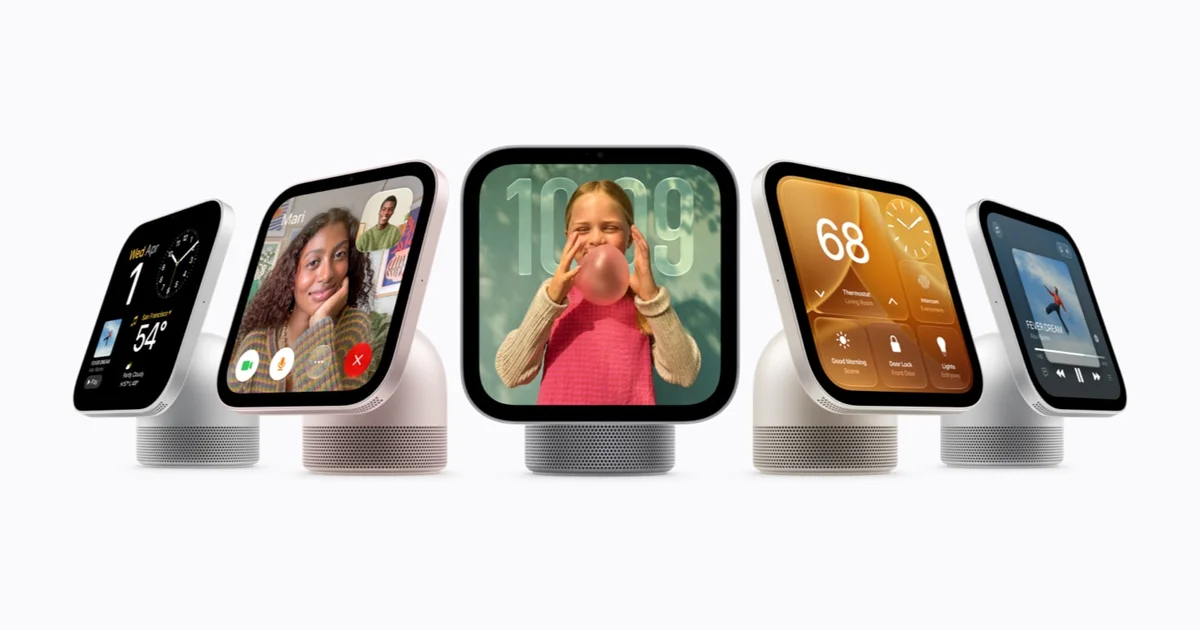
Apple has spent more than a decade trying to make smart-home products easier to use. HomeKit provided the early framework. The Home app later brought devices from different manufacturers into a single interface, while Matter and Thread helped improve compatibility across the industry. For much of that period, Apple remained primarily a platform provider. Other companies manufactured cameras, door locks and thermostats, while Apple supplied the software and ecosystem connecting them. The October 13 announcement changes that relationship. Apple has introduced its first coordinated smart-home accessory collection, developed with LG Electronics and Schneider Electric, alongside a new central display called HomeView. The company also unveiled the HomePod mini 2, reinforcing its approach to voice control and household audio. Together, the products represent a more complete smart-home proposition. Apple is no longer simply encouraging manufacturers to support its platform. It is working with selected partners to deliver a curated collection of devices intended to behave as a unified system. The attraction is obvious for households frustrated by multiple apps, competing accounts and complicated configuration procedures. Whether that convenience justifies the cost and ecosystem dependence is a separate question.
HomeView is Apple's new control center
The most important new device is HomeView. It features a seven-inch Liquid Retina display powered by an Apple A18 chip. Apple offers two versions: a tabletop model with a built-in speaker base and a wall-mounted alternative intended for entryways, kitchens and other shared spaces. The tabletop version comes in silver, starlight, rose pink and space gray. The wall-mounted model is available in silver and space gray. Apple has designed the interface to respond to how far away someone is standing. At a distance, it prioritizes simple information that is easy to read. As a person approaches, it can display more detailed controls and content. The screen also adjusts to ambient lighting, with a claimed brightness range extending from 500 nits down to 0.3 nits. This could make the display suitable for both brightly lit kitchens and nighttime use. Its primary function, however, is smart-home control. HomeView can display camera feeds, operate lighting, adjust thermostats and control compatible locks and blinds. Apple says it can show up to nine live camera streams simultaneously. That may prove useful in homes with several indoor and outdoor cameras. Instead of repeatedly opening the Home app on a phone, household members could check devices from a fixed display. The experience still depends on the products and services being installed and supported.
Siri AI is intended to make home control conversational
Apple's redesigned Siri AI is central to HomeView. The assistant is intended to understand more natural, contextual requests than traditional voice-command systems. Users should be able to ask for information, control connected devices and interact with household applications through conversation. HomeView can also take account of information shown on its display. When paired with a compatible iPhone or iPad running Apple Intelligence, Siri AI can draw on personal context from apps such as Messages and Calendar. That opens the possibility of asking the household display for information that previously required unlocking a personal device. Apple also describes conversations continuing across its different products. A request started on HomeView could be resumed through Siri on another compatible device. This approach fits Apple's broader ecosystem strategy. But it introduces technical challenges. Understanding an ordinary question is not the same as safely executing a command involving a door lock, camera or heating system. The assistant needs to interpret intentions correctly and respect the permissions associated with each user. Its practical reliability will therefore matter more than the sophistication of its demonstration conversations. An AI assistant that occasionally misunderstands entertainment requests is inconvenient. An assistant that misunderstands a security-related command creates a more serious problem.
Face recognition personalizes the shared display
HomeView supports facial recognition for up to six users. The device can identify household members and display personalized interfaces and information. Apple describes access to Messages, Calendar, Reminders and other personal applications. This raises an important privacy question. A smart-home display is intended to sit in a shared space where family members and visitors may be present. It cannot treat every nearby person as authorized to view private content. Apple says sensitive information requires additional conditions. The enrolled person must be recognized, while their paired iPhone or iPad must be present and recently unlocked. The device's A18 chip also includes Secure Exclaves designed to isolate camera and microphone processing from other software components. According to Apple, data processed inside those protected environments cannot be accessed by ordinary apps or the company itself. These are meaningful architectural safeguards. They should not be interpreted as a guarantee against every possible security failure. Account protection, device updates and the configuration of household permissions remain important. The challenge is delivering useful personalization without allowing a communal display to expose information intended for one person.
LG is building a complete family of security cameras
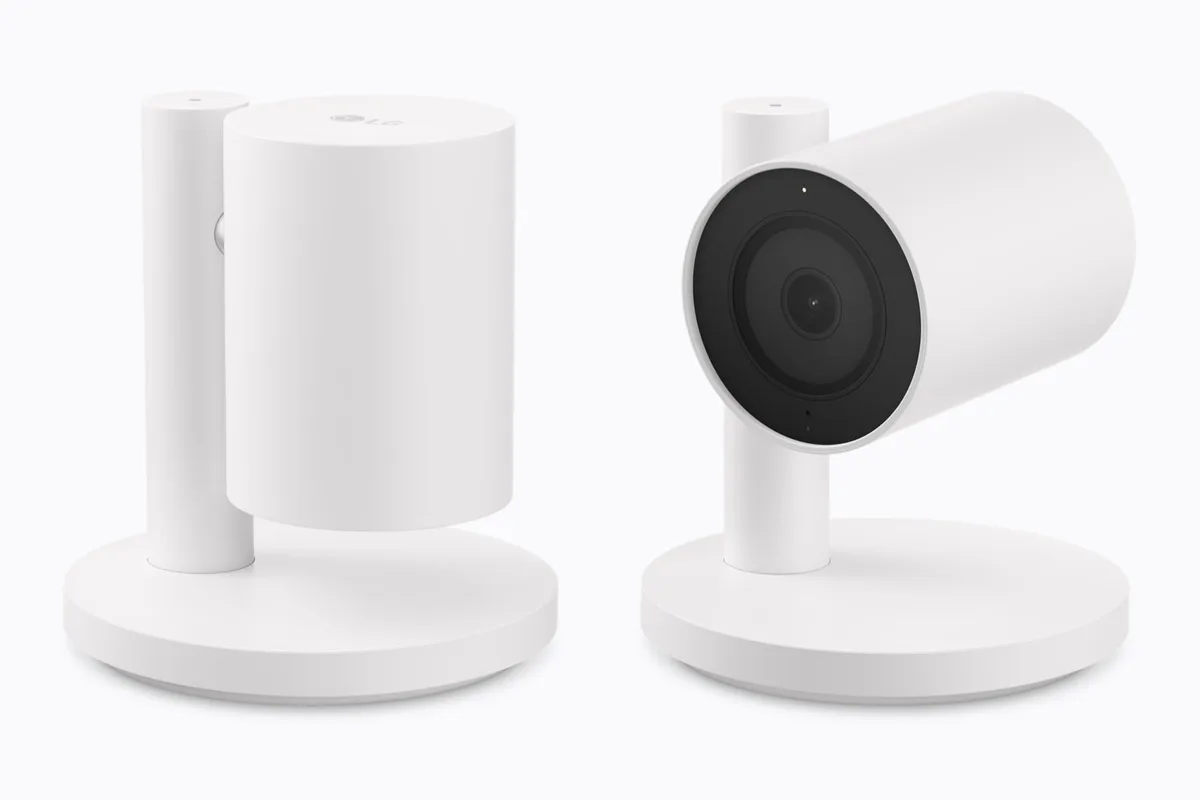
Apple Home Collection introduces several surveillance products developed with LG Electronics. The range includes an indoor camera, an outdoor camera, a floodlight camera and a video doorbell. The Indoor Cam is particularly distinctive. Its camera body can tilt to change its view, and Apple describes a feature that automatically moves it into a non-monitoring position when a household member returns. This offers a physical indication that the device is no longer observing the room in the same way. The mechanism does not remove the need for clear privacy settings or reliable software controls. It does, however, address a familiar concern about indoor security cameras: knowing when they are actively monitoring a space. The Outdoor Cam is designed for exterior coverage, while the Floodlight Cam combines surveillance with adjustable lighting. The Video Doorbell uses two cameras. One provides a view of visitors at the entrance, while the other covers the lower area where packages may be placed. The front camera captures up to 2.5K video, with the secondary package-facing camera recording in Full HD. The separate views could address a weakness of some conventional doorbell cameras, which may capture a visitor's face but fail to show deliveries placed close to the door. As with any security camera, practical image quality will depend on lighting, installation and the effectiveness of its processing. Manufacturer specifications alone cannot establish how well the products perform in every environment.
Apple wants to remove separate camera subscriptions
The LG cameras are designed to work with HomeKit Secure Video and supported iCloud+ plans. Apple says compatible subscriptions provide ten days of encrypted event recording history. Customers will not need a separate subscription account with LG for the camera service described. That simplifies management, but it does not make all recording features free. The number of cameras supported depends on the iCloud+ plan, and advanced Apple Intelligence features have additional requirements. Natural-language searches and automatic summaries of recorded footage require supported Apple Intelligence hardware and an eligible subscription. Apple also says the cameras include local storage that can continue recording events during certain Wi-Fi interruptions. This is useful because losing internet connectivity should not necessarily mean losing every important moment. However, the presence of local storage does not guarantee uninterrupted recording under all conditions. Power failures, limited storage capacity and synchronization behavior will still affect reliability. The system's performance should be judged through the complete recording process rather than by any single feature. The broader advantage is administrative simplicity: compatible video devices are managed through Apple's existing home and cloud services instead of several manufacturer-specific platforms.
A smart lock extends automation to physical access
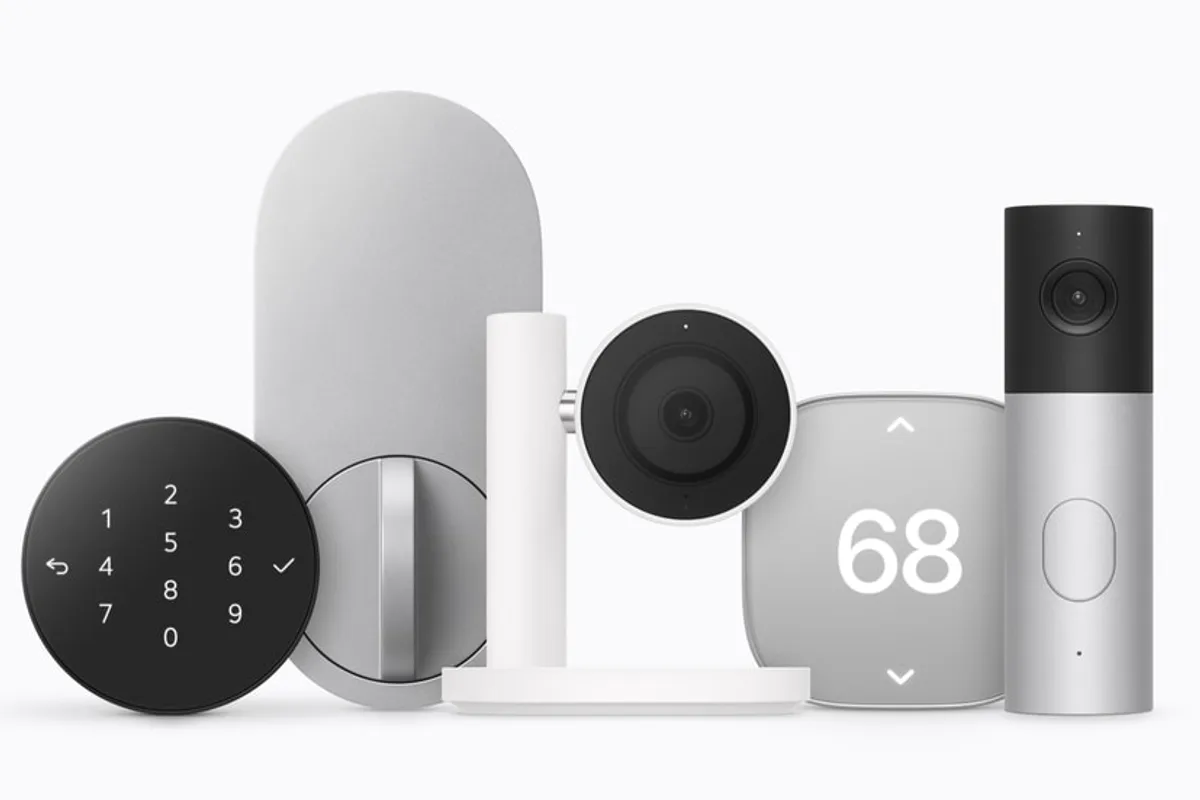
LG is also introducing the Smart Deadbolt Lock. The system combines an internal locking mechanism with an exterior keypad and Apple Home integration. It can report its status and participate in household automations. Apple describes scenarios where leaving home triggers multiple actions. The thermostat adjusts for an empty property, the door locks and security cameras begin monitoring. When someone returns, the system can prepare the house through another sequence of commands. These coordinated actions are the practical purpose of a smart-home platform. Their usefulness depends on reliability, however. A door lock is a more consequential device than a smart light bulb. Buyers need to understand how it operates during power failures, network outages and situations where their phone is unavailable. Mechanical compatibility and emergency access are equally important. The lock's integration with Apple Home does not establish compatibility with every door design. Regional construction standards and installation practices can differ considerably. That makes geographic availability particularly relevant for products involving the physical security of a building.
LG and Schneider Electric target climate control
Apple Home Collection also includes thermostats and environmental sensors from LG and Schneider Electric. The two manufacturers are bringing their experience in climate and energy management to Apple's platform. Their connected thermostats can respond to schedules, household activity and settings coordinated through the Home app. Temperature and humidity sensors can provide additional information about conditions in different rooms. The objective is to make heating and cooling more responsive to how people actually use their homes. For example, an automated system may reduce heating or cooling demand when a property is empty and restore comfort before residents return. Such automation can help avoid unnecessary energy consumption in some situations. It does not guarantee a particular reduction in bills. Actual savings depend on building insulation, climate, existing controls and household behavior. Hardware compatibility is another important limitation. The announced products are primarily aimed at North American heating and cooling systems. Apple describes installation aids and power accessories intended to simplify connections. Those features do not establish that the products can be installed directly in European homes with different heating equipment. Buyers will need to verify supported systems rather than assuming that Matter compatibility covers all electrical and mechanical requirements.
One-tap setup is the foundation of Apple's strategy
The new accessory collection is designed around a particularly simple setup process. Apple says a compatible iPhone can recognize and pair products through a one-tap experience. Once added, the devices appear directly in the Home app. Customers do not need to download a separate manufacturer application or create an additional account just to manage the supported accessories. That matters because complexity remains one of the smart-home industry's persistent problems. A household may own a doorbell from one brand, a thermostat from another and several different lights. Each product might require its own account, software update procedure and set of controls. The result can become cumbersome even when individual devices work correctly. Apple is trying to consolidate that experience. Thread support is part of the technical approach, helping compatible devices communicate through a low-power mesh network. Apple also describes automatic updates to network credentials when household Wi-Fi settings change. These features could make maintenance easier. But connectivity standards do not eliminate every source of failure. The system still depends on compatible hardware, power and a correctly configured home network. The value of Apple's design will become clearer once the accessories are tested together in real homes.
HomePod mini 2 supplies sound and voice control
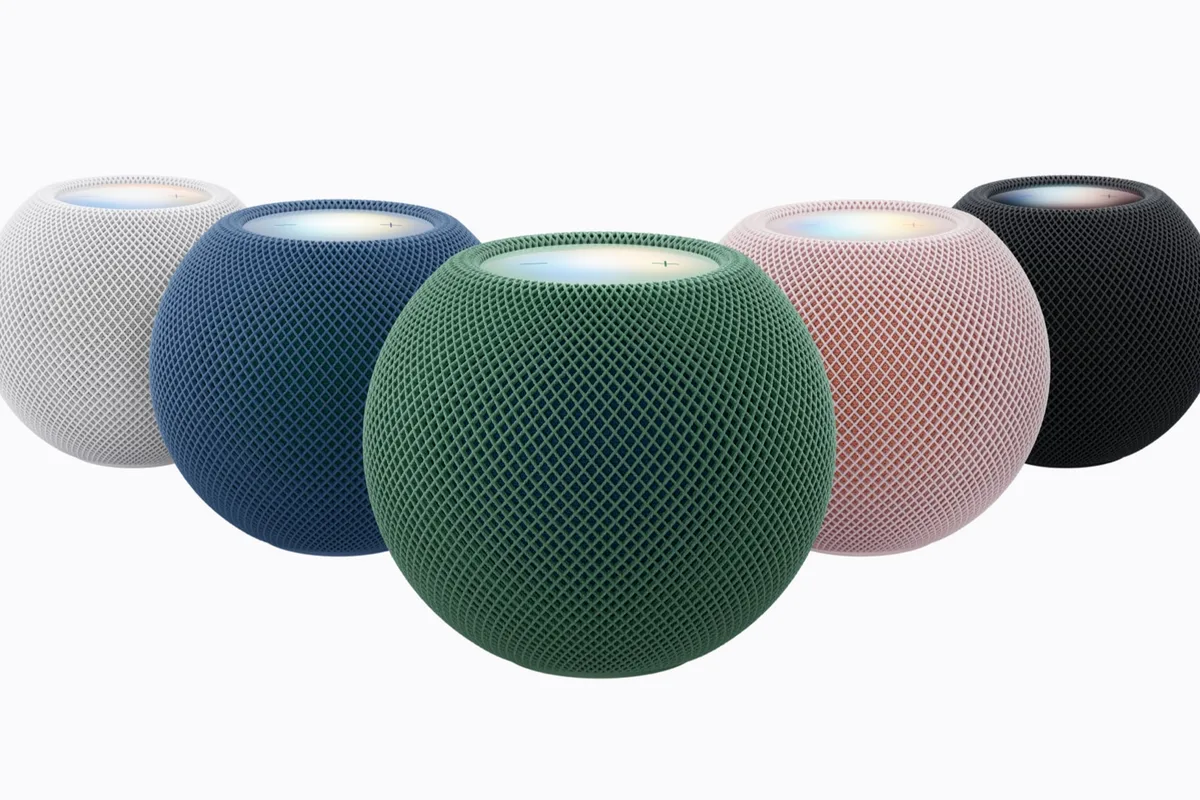
Alongside the new smart-home display, Apple has introduced the second-generation HomePod mini. The compact speaker is available in white, blue, green, pink and midnight. Apple is promising richer sound, multiroom playback and stronger integration with its household devices. The speaker can operate on its own or as part of a stereo pair. With the new Apple TV 4K, compatible HomePod speakers can also form a four-speaker surround setup. That extends Apple's audio strategy from individual rooms to more elaborate entertainment configurations. For smart-home users, the important function is voice control. The HomePod mini can accept commands for compatible devices and participate in household automations. The more advanced conversational Siri AI experience is planned through a future software update in supported countries. It is not available everywhere at launch. Apple has announced a US price of $149 and a French price of €169. The HomePod mini 2 is available for preorder, with retail availability scheduled for October 30, 2026. Unlike HomeView, it is part of Apple's announced French hardware rollout. But French buyers should not assume they will immediately receive the Siri AI features demonstrated for selected English-speaking markets.
Europe will not receive HomeView at launch
Regional availability is the biggest limitation of Apple's new smart-home strategy. HomeView starts at $299 in the United States for both the tabletop and wall-mounted versions. Preorders have opened in selected markets, with availability beginning November 13. But Apple explicitly states that HomeView will not be sold in the European Union at launch. The company attributes that restriction to Siri AI currently being unavailable in iOS within the EU. Apple says it is working with European authorities to find a possible path forward. There is no confirmed release date for France or the wider EU. This is not merely a question of translating the interface. Apple has tied the device's regional availability to the underlying Siri AI platform. The distinction matters because Apple has published localized information about HomeView even in markets where it is not being sold. A French-language press release is not evidence of confirmed French retail availability. The accessory collection also has regional limits. LG's cameras are announced for the United States, Canada and the United Kingdom. The lock and thermostats primarily target the United States and Canada. Apple has not announced equivalent French availability for the entire lineup. European customers therefore face a fragmented rollout rather than immediate access to the complete system.
Premium prices create an expensive connected-home package
Apple is clearly positioning the new devices above the most affordable smart-home products. HomeView costs $299 in the United States. LG's Indoor Cam starts at $199.95, the Video Doorbell at $249.95 and the Outdoor Cam at $299.95. The Floodlight Cam costs at least $399.95. The Smart Deadbolt Lock starts at $349.95, while the LG and Schneider thermostats begin at $199.95. These are US starting prices rather than confirmed European retail prices. Amazon and Google have offered smart displays, cameras and voice-assistant devices for years, often with cheaper entry-level options. Apple is not trying to compete solely on the lowest hardware price. Its argument is that a better-integrated collection can reduce setup difficulties, improve consistency and provide a clearer privacy model. That may be attractive to existing Apple households. The cost of installing a complete system can nevertheless rise quickly. Adding a display, doorbell, indoor camera, thermostat and connected lock creates a substantial investment before subscription or installation costs. A more convenient interface does not eliminate those expenses. The financial case will depend on whether the system genuinely saves time and delivers reliable functions that justify the premium.
Matter support does not make every feature universal
Apple continues to embrace Matter and Thread as important connected-home technologies. Matter enables supported device categories to work across different platforms under common standards. Thread provides network connectivity suited to many low-power household accessories. These standards reduce some of the barriers that previously kept smart-home ecosystems separated. But they do not necessarily expose every feature to every platform. Apple Intelligence video summaries, personal context and some advanced household automation functions remain closely connected to Apple's own services. A device that can be added to another Matter-compatible platform may not provide an identical experience there. That distinction is important for people who want flexibility across operating systems. Apple's latest strategy combines standards-based interoperability with exclusive ecosystem features. For an Apple-first household, the result could be convenient. For a mixed-device home, the remaining platform differences may matter just as much as the common connectivity standard. The extent of practical interoperability will need to be established through testing.
Privacy is becoming a core selling point
Connected-home devices can collect sensitive information. Cameras observe people and movement. Locks reveal access patterns. Thermostats can indicate when a property is occupied. A shared smart display may also handle messages, calendars and other personal content. Apple emphasizes end-to-end encryption and protected processing across the new product family. The company says camera footage and personal information managed through Apple Home are not accessible to LG, Schneider Electric or Apple under the described encrypted arrangements. Some processing takes place locally, while selected AI functions can use Apple's Private Cloud Compute infrastructure. Those designs are relevant security measures. They should not be mistaken for evidence that no vulnerability or configuration mistake could ever occur. Account compromise, physical access and software defects remain possible risks. Users still need to understand who can operate devices and how household permissions are managed. The distinction between avoiding multiple manufacturer subscriptions and requiring iCloud+ is also important. Apple may simplify the commercial relationship, but advanced camera storage and analysis still carry eligibility and subscription requirements. The privacy proposition is therefore part of a broader ecosystem that customers need to evaluate as a whole.
The rollout stretches into 2027
Apple's smart-home announcement contains several separate timelines. HomePod mini 2 is scheduled for October 30. HomeView is expected in selected markets on November 13. Apple Home Collection accessories begin arriving in December 2026, with some products not expected until early 2027. Certain Siri AI capabilities also depend on future software releases. This means the complete connected-home scenarios described by Apple may not be reproducible immediately. Customers must consider the availability of each product, supported services and compatibility requirements. Independent reviews will also be needed. The acoustic quality of HomeView, the reliability of LG's cameras and the consistency of coordinated automations have not been established merely by their announcement. Apple has described a coherent system. Its performance in real households remains to be tested.
Apple wants to design the whole connected-home experience
The significance of the October 13 launch extends beyond a single smart display. Apple is assembling the components of a more complete household platform. HomeView provides the shared interface. HomePod speakers handle voice interaction and audio. LG cameras monitor the property. A connected lock controls access. LG and Schneider thermostats manage temperature. The Home app brings those elements together through automations. This could address a longstanding weakness of smart-home technology: individual devices are often easy to understand, while coordinating several of them remains frustrating. Apple's partnerships allow it to offer a larger collection without developing every hardware category independently. The strategy also brings significant challenges. The products are expensive, and the most important new interface is not available in the European Union at launch. The promised experience depends on compatible hardware, services and the reliability of Siri AI. For households already invested in Apple's ecosystem, the approach may deliver meaningful convenience once the products arrive. For everyone else, the question is whether a highly integrated system is worth its cost and dependence on one platform. Apple is no longer satisfied with making smart-home accessories work with the iPhone. It wants to shape the entire experience of living with them.