
 By Adri
Alienware has effectively built two answers to the same OLED question. One assumes that a gaming monitor should make every frame look better. The other wants to show another frame as quickly as possible.
The AW3226Q runs a flat 3840×2160 panel at 165Hz. The AW2527HX drops to the familiar 24.5-inch competitive format and is reported with a 1920×1080 resolution, but pushes refresh rate all the way to 560Hz.
Both carry a quoted 0.03ms grey-to-grey response time.
The 32-inch model tackles more than gaming speed
Alienware uses RGB Stripe Tandem OLED technology in the AW3226Q, bringing the panel architecture previously introduced in its larger 39-inch display to a conventional 16:9 4K format.
The four-layer emissive stack is designed to raise brightness, while the RGB stripe subpixel layout tackles a less glamorous OLED problem: text clarity. Earlier OLED monitor subpixel structures could produce visible colour fringing around desktop text, especially at close range.
Dell quotes 1,000 nits peak brightness, 99% DCI-P3 coverage and factory calibration below Delta E 2. VESA DisplayHDR True Black 400 and Dolby Vision are supported.
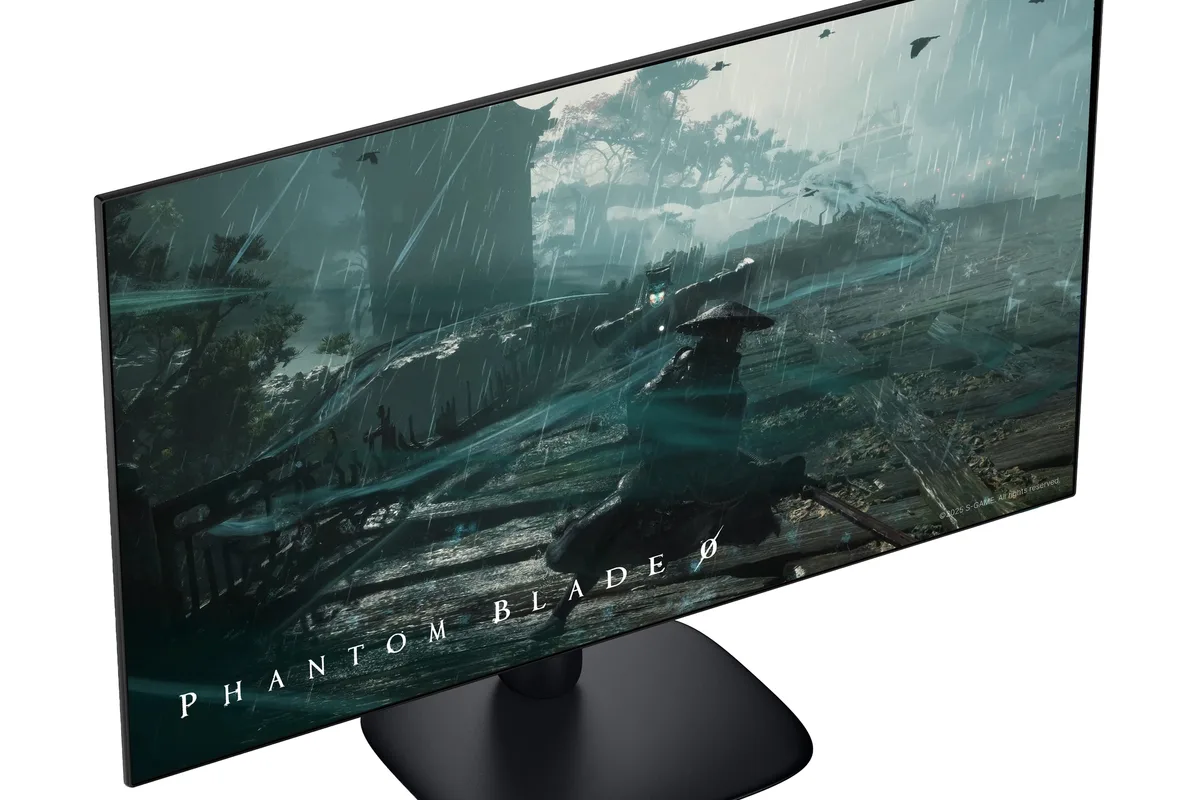
Its 165Hz refresh rate is no longer an extreme headline number, but driving 4K well above 120 frames per second is still a substantial GPU workload. Nvidia G-Sync Compatible, AMD FreeSync Premium Pro and VESA AdaptiveSync support are included, along with HDMI 2.1 FRL for modern consoles.
The AW3226Q is scheduled for fall 2026 with a US launch price of $699.
The AW2527HX is far less interested in resolution
Alienware developed the 24.5-inch AW2527HX with Team Liquid. Its design targets competitive FPS players who care about motion clarity, response and repeatable tournament setups more than desktop real estate.
The panel reaches 560Hz and connects through DisplayPort 2.1 UHBR13.5 without DSC for its intended high-bandwidth mode. Alienware calls it the fastest monitor the company has produced.
It is still an OLED rather than a stripped-down TN esports panel. VESA DisplayHDR True Black 600 is specified, alongside up to 1,500 nits peak brightness and a matte anti-glare low-reflectance coating.
Team Liquid's influence is visible in the boring parts
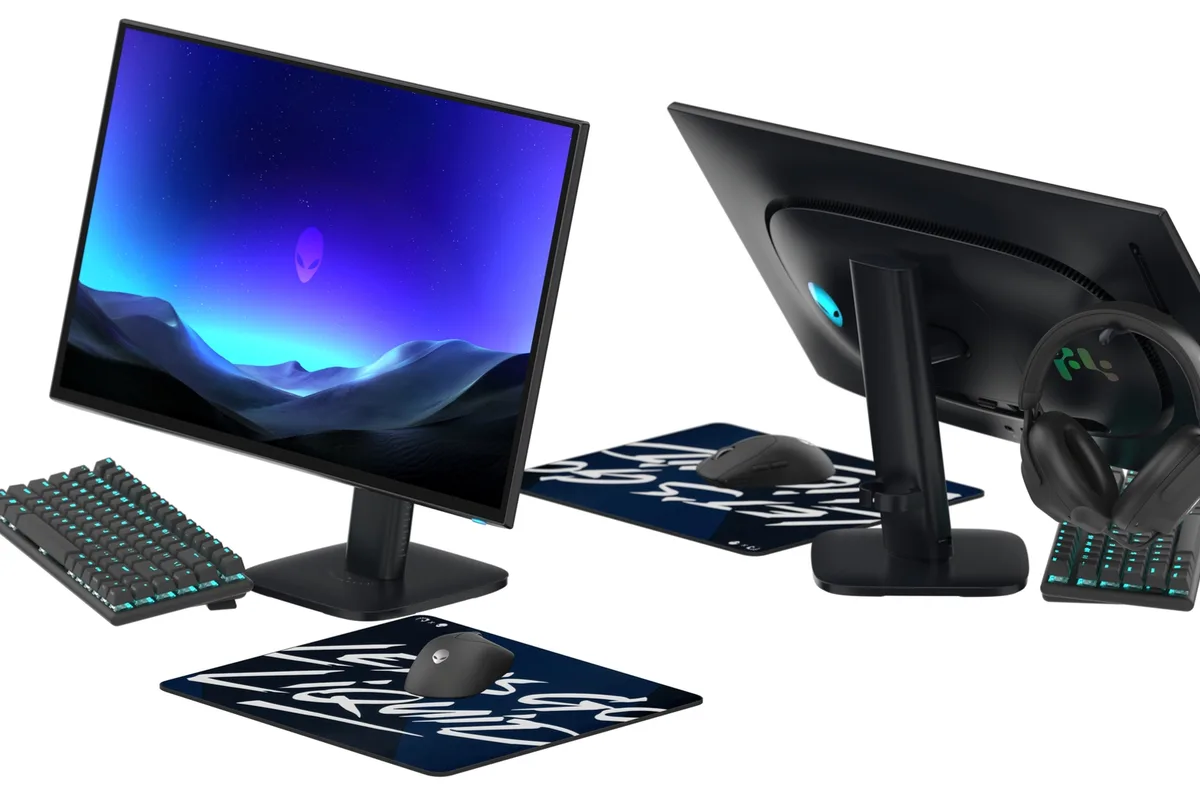
The stand footprint is deliberately small so players can rotate a keyboard underneath it. Height and rotation markings help recreate the same position after moving the display between venues.
A dedicated esports control can quickly switch between 4:3 and 3:2 aspect ratios. There is also a flip-out headset hanger behind the panel.
Those features would look oddly specific on a general-purpose monitor. Here, specificity is the entire product strategy.
OLED no longer describes one kind of gaming monitor
The interesting part of Alienware's announcement is not that OLED has become faster. It is how far the category is beginning to split.
A 32-inch 4K 165Hz display asks the GPU to deliver detailed frames at a demanding resolution. A 560Hz esports panel asks a different question entirely: how many complete frames can the system produce before image quality stops mattering as much as latency and motion clarity?
Both monitors include a three-year warranty covering OLED burn-in. The AW3226Q arrives first in fall 2026. Alienware plans the AW2527HX for the first quarter of 2027, with pricing still to be announced.