
 By Adri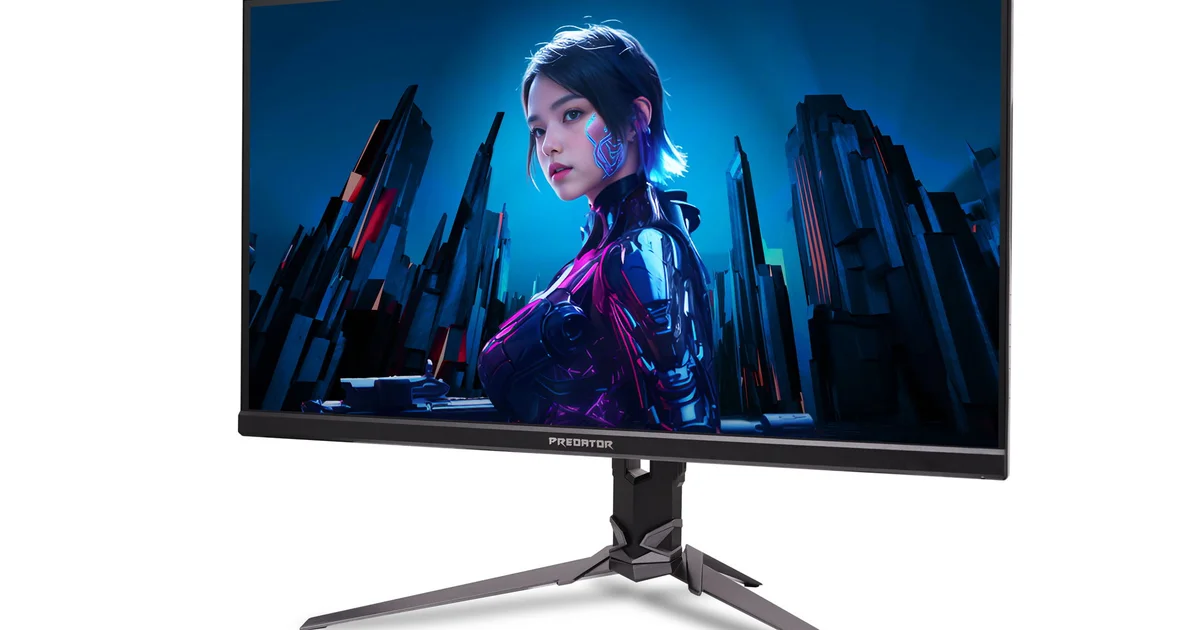
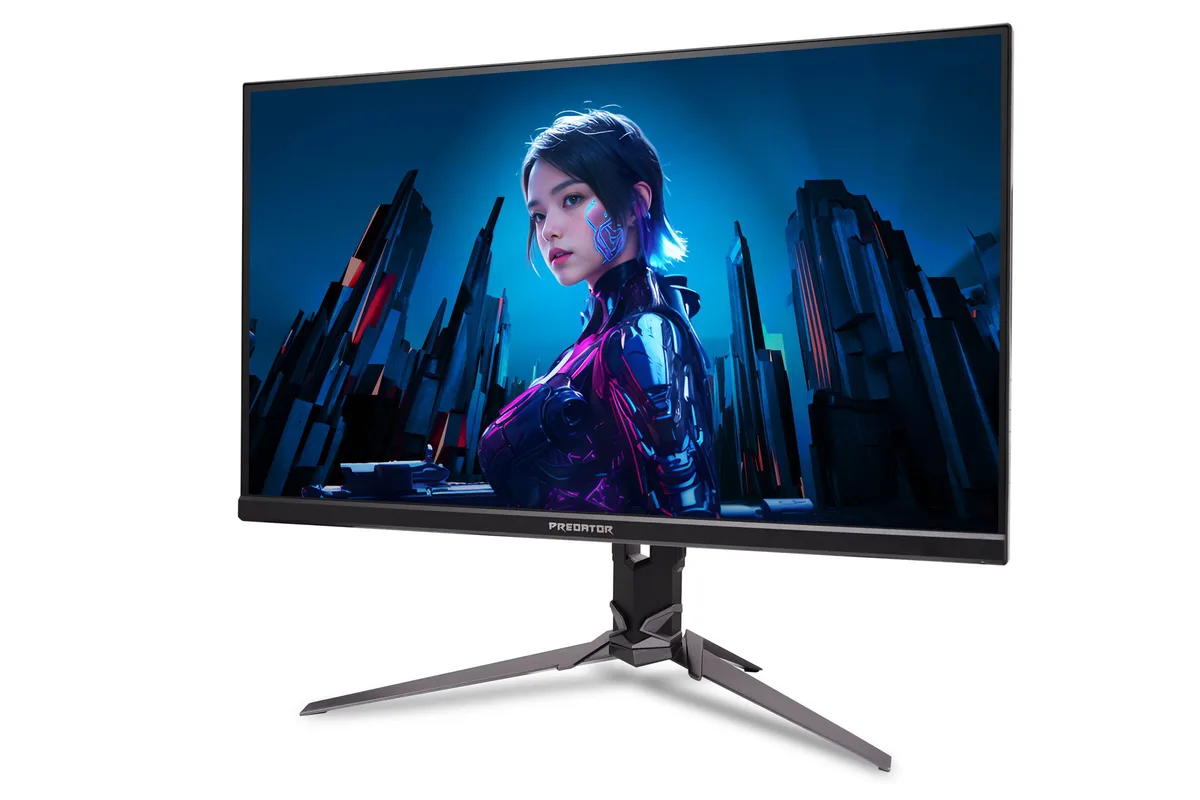
A thousand refreshes every second is now an actual monitor specification rather than a laboratory talking point. Acer's Predator XB253Q U1 delivers 1920×1080 at 1,000Hz on a 24.5-inch IPS panel.
That distinction matters. Acer has previously shown displays capable of reaching 1,000Hz by dropping to a much lower resolution. The XB253Q U1 keeps its native Full HD resolution at its maximum refresh rate.
The format is unapologetically built around esports. A 24.5-inch 1080p screen is small by modern enthusiast standards, but it also keeps the entire image within a tight field of view and avoids asking the GPU to render 1440p or 4K while chasing extreme frame rates.
At 1,000Hz, each refresh cycle is only one millisecond
The timing is simple. A 240Hz panel refreshes roughly every 4.17ms. At 500Hz that interval falls to 2ms. At 1,000Hz, it reaches 1ms.
That does not make the whole PC respond in one millisecond. Game-engine latency, CPU work, GPU rendering, input devices, buffering and the panel's actual pixel transitions all remain part of the chain.
Feeding the display is another issue. Games such as Counter-Strike 2 or Valorant can reach extremely high frame rates on powerful hardware, but sustaining numbers close to 1,000fps is a very different target from simply owning a fast graphics card.
Acer's 0.3ms figure needs to be read carefully
The official specification lists a 0.3ms response figure with VRB Pro, Acer's Visual Response Boost Pro motion-blur reduction technology.
Acer does not label that number as a conventional grey-to-grey pixel-transition result in its specification table. That distinction matters on a monitor whose entire sales pitch revolves around motion clarity and speed.
FreeSync Premium and Nvidia G-SYNC Compatible support are included. Acer also uses a Circular Polarizer layer that it says helps reduce glare and eye strain over longer gaming sessions.
The rest of the panel is surprisingly conventional
Native brightness is rated at 400 nits, increasing to a quoted 450-nit peak in HDR400 mode. The display carries VESA DisplayHDR 400 certification and covers 99% of sRGB and 90% of DCI-P3.
Colour depth is specified as 8-bit plus FRC. Connectivity consists of two HDMI 2.1 inputs and one DisplayPort 2.1 connection.
The stand offers 150mm of height adjustment along with tilt, swivel and pivot. There are no integrated speakers.
The harder number to swallow is €1,099
Acer plans to sell the Predator XB253Q U1 in Europe during the first quarter of 2027 starting at €1,099. North American pricing starts at $1,099.99, while the Chinese launch price is listed at RMB 7,999.
That puts the monitor in a part of the market filled with high-refresh OLEDs, fast 1440p models and capable 4K displays. The Predator chooses none of those compromises. Its money goes primarily toward refresh rate.
For most players, that is an exceptionally narrow priority. For professional esports competitors and the small group chasing every possible reduction in motion persistence and display latency, it is exactly the point.
Four-digit refresh rates need four-digit frame rates to make sense
The leap from 60Hz to 144Hz is dramatic. Higher refresh rates continue to reduce frame intervals, but the absolute gains get progressively smaller: moving from 500Hz to 1,000Hz saves only one millisecond per refresh cycle.
That millisecond can matter in a competitive setup already tuned around high polling rates, low-latency rendering and stripped-back graphics settings. It is considerably harder to justify on a general gaming PC.
The XB253Q U1 therefore makes more sense as a technical extreme than a new default for gaming monitors. It arrives in Q1 2027, when independent testing should reveal how much motion clarity and real system latency Acer actually extracts from that 1,000Hz headline.