
 By Tsuky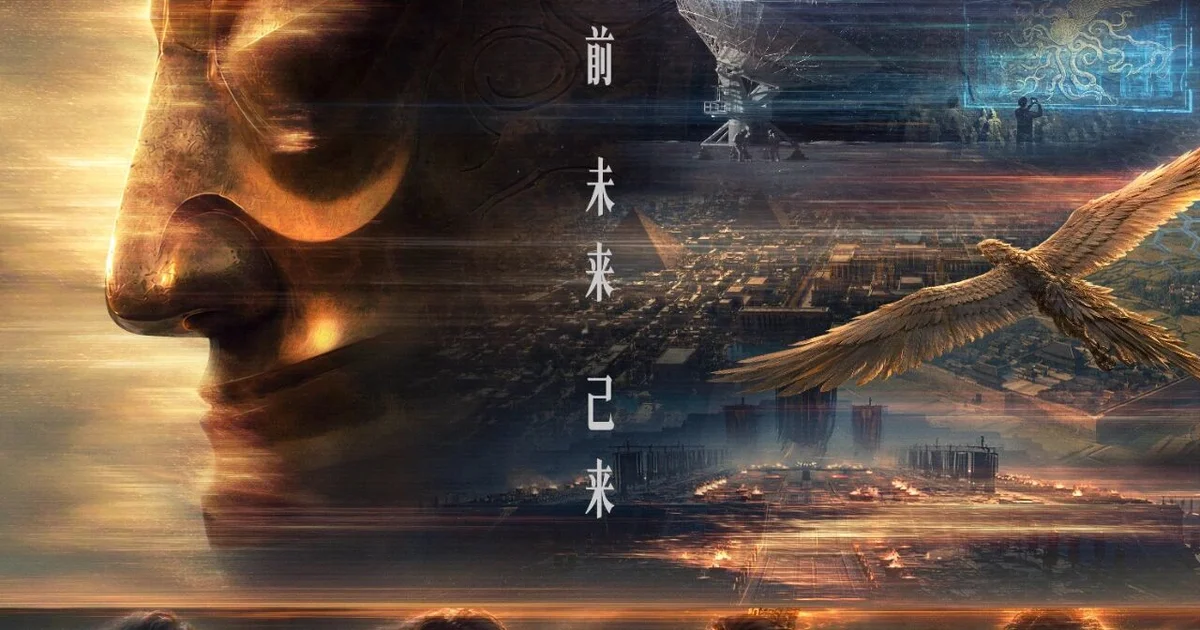
China does not lack AI-generated video. DataEye figures reported by Reuters counted 221,900 AI shows launched on Douyin in the first half of 2026. Feature length changes the technical problem, however. A short clip can succeed on the strength of a handful of striking shots. A movie has to remember its own world for roughly two hours.
Faces, clothing, props, architecture, lighting and spatial relationships all have to survive across cuts. The audience should not feel as if the underlying reality has quietly been regenerated every time the camera changes angle.
Bona is not describing a one-click movie
The company's claimed workflow is deliberately hybrid. Boka Movie Cloud Studio performs generation and execution, while Bona's AIGMS team controls creative initiation and filmmaking decisions. Every character is an original digital creation rather than a digital replica of a real performer.
The 1.2 million working images put some scale behind that description. Faster generation does not remove selection. Someone still has to decide which outputs survive, which are rejected and whether each accepted image remains compatible with shots created earlier. Bona says the team spent two years on technical development and iterated the complete movie more than 100 times.
That suggests a useful shift in the bottleneck. The marginal cost of producing another candidate frame can fall dramatically while the cost of judgment remains. More generation can even create more material requiring review.
Feature length exposes what short-form video can hide
Bona reached this point through smaller experiments. Its Sanxingdui: Future Revelation short-form project appeared in 2024, followed by further development of the company's AIGMS production system. A concept trailer for the feature was presented at FILMART in Hong Kong this March, with an international version shown around Cannes in May.
The regulatory milestone came in late April. China's National Film Administration granted the project a public-screening permit, and Caixin reported that it was processed as animation because no dedicated censorship category exists for AI-generated movies. The final theatrical release is now listed at 100 minutes.
That runtime makes temporal consistency a first-order requirement. A generative system can create a convincing isolated face without automatically carrying the production memory of a physical actor, costume department or built set into the next shot. A feature pipeline has to manufacture that persistence through references, digital assets, model controls and human supervision.
Original digital characters are also a rights strategy
Bona's decision not to reproduce real performers simplifies one visible source of risk. The system does not need to preserve a celebrity likeness, and the production does not have to base its central characters on digitally copied actors.
That does not settle the wider copyright questions around generative media. Reuters reports growing complaints in China about existing characters and creative material being incorporated into AI content without credit. The country requires explicit labeling of AIGC material, while clear copyright rules for the field are still developing.
It does make Sanxingdui a cleaner production case to examine. Instead of beginning with a dispute about whether a synthetic performer resembles somebody who never consented, attention can move toward the consistency and expressive limits of characters designed for this workflow from the outset.
The pipeline is generating a story about algorithmic dependence
There is an unusually neat loop between the technology and the premise. The movie imagines a future in which humanity has handed too much decision-making to a superintelligent AI and fallen into a global crisis. Seven mysterious symbols on ancient Sanxingdui bronzes may contain the key to escaping it.
The production is therefore using generative systems to tell a story about the danger of surrendering human judgment to algorithms. Bona describes its own workflow in almost exactly the opposite terms: AI generates and executes; humans retain judgment.
That symmetry does not guarantee an interesting film. It does create a useful technical test. If characters, environments and staging remain convincing for 100 minutes, Bona will have demonstrated that its pipeline can sustain feature-scale continuity. If expressions and visual identity drift, the million-image production count may instead reveal how expensive consistency becomes once generation itself is cheap.
On October 23, the benchmark becomes a ticket
Until now, Sanxingdui could be discussed through production milestones: a completed workflow, a theatrical permit, festival presentations and a feature-length deliverable. Nationwide distribution introduces a different metric. Moviegoers are not buying access to an AI benchmark. They are buying a film ticket.
That may be the most valuable part of the experiment. Generative-video costs are falling and output volume is already exploding. Scarcity moves elsewhere: continuity, editing, art direction, narrative judgment and the ability to decide which generated material deserves to survive.
Sanxingdui: Future Memories will not settle the vague question of whether AI “can make movies.” Starting October 23, it offers a more useful test: a 100-minute feature built through an industrial generative pipeline, exposed to the same attention span, screen size and market pressure as conventional cinema.